Advertisement
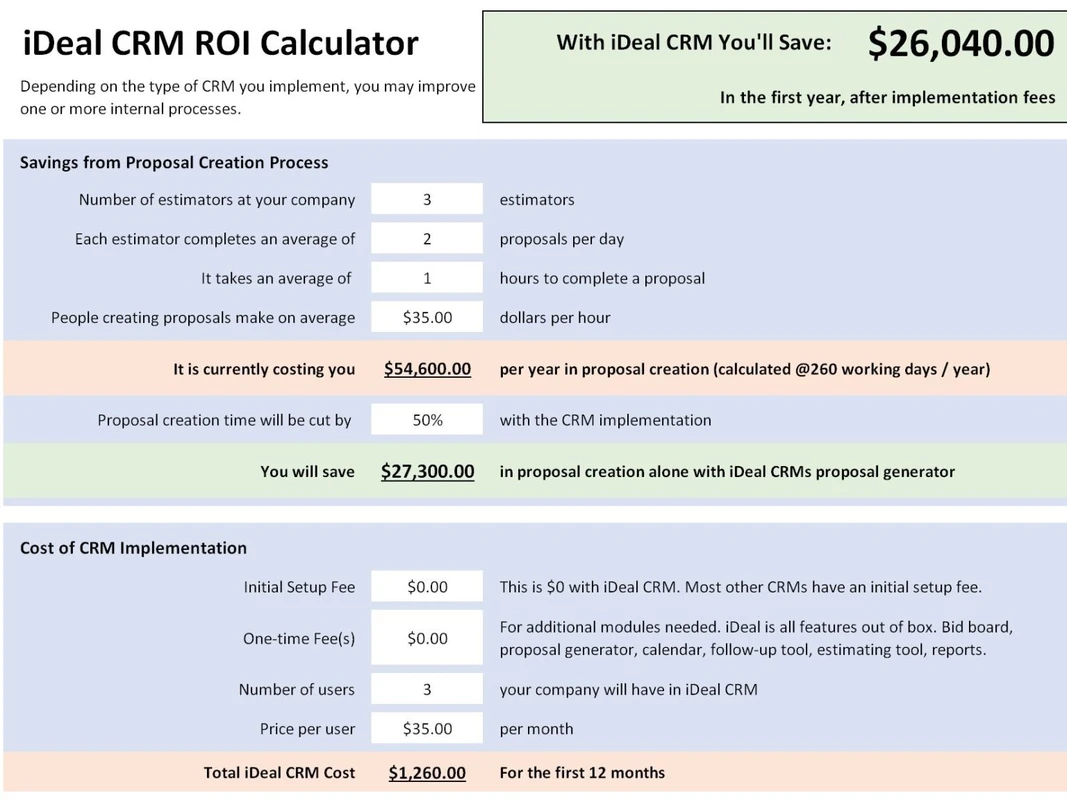
CRM Software – CRM ROI is calculated by subtracting the total cost of the CRM investment—including software licenses, implementation, integration, training, and ongoing maintenance—from the total gains achieved. These gains encompass increased revenue through improved sales conversions and customer retention, as well as cost savings from automation and operational efficiencies. The resulting net benefit is then divided by the total cost of the CRM investment and expressed as a percentage to indicate the profitability and efficiency of the CRM system. This formula captures both tangible financial returns and softer benefits, such as enhanced forecasting accuracy and time savings, which contribute to the overall value of CRM deployments.
The robust measurement of CRM ROI requires a detailed breakdown of both gains and costs. Gains are not limited to direct revenue increases but also include productivity improvements and qualitative enhancements to customer experience. Costs must factor in upfront expenses like subscription fees and integration services, as well as longer-term expenditures such as training and administrative overhead. Accurate ROI calculation also depends on isolating the CRM’s contribution from other overlapping business factors, necessitating ongoing data monitoring and adjustment. According to Nucleus Research, effective CRM integration can achieve up to $8.71 in returns per dollar invested, with typical business growth ranging between 20-30%, underscoring the financial importance of precise ROI analysis.
Understanding CRM ROI and Its Importance
Measuring CRM ROI is essential for businesses to justify the investment in CRM systems and to optimize their customer relationship strategies. ROI provides a quantifiable metric that balances the financial gains against the total cost of CRM deployment, helping decision-makers evaluate the system’s effectiveness. Unlike the payback period—which measures the time required to recoup the initial investment—ROI assesses the overall efficiency and profitability of the CRM over its lifecycle. This distinction is critical for organizations aiming to align CRM initiatives with long-term business objectives rather than short-term cost recovery.
Advertisement
CRM ROI not only informs budget allocation but also drives strategic planning around customer engagement, sales processes, and operational workflows. Companies deploying B2B CRM platforms such as HubSpot CRM or Oracle CX must consider how ROI metrics reflect both direct sales impact and indirect benefits like enhanced customer retention or reduced manual tasks. As CRM adoption rates improve, the capacity to measure ROI accurately becomes a competitive advantage, enabling firms to fine-tune their CRM usage and maximize returns.
The CRM ROI Calculation Formula Explained
The fundamental CRM ROI formula is:
Component |
Description |
|---|---|
Total Gains |
All financial benefits from CRM including revenue increases, cost savings, and productivity gains. |
Total Costs |
All expenditures related to CRM acquisition, implementation, training, and ongoing management. |
ROI |
(Total Gains – Total Costs) / Total Costs, expressed as a percentage. |
The numerator (Total Gains minus Total Costs) represents the net benefit derived from the CRM investment, while the denominator (Total Costs) provides the scale of the investment. This ratio expresses how much profit or value each dollar spent on CRM returns. For instance, an ROI of 150% indicates that for every dollar invested, the company gains $1.50 in net benefits.
Breaking down the formula requires clear identification of what constitutes gains and costs, as these can vary widely depending on the CRM system, industry, and business model. The total gains include both direct revenue increases—such as higher sales conversions—and indirect benefits like reduced operational expenses. Total costs encompass all phases of the CRM lifecycle, including hidden costs like change management and user training.
Detailed Components of CRM Gains
Revenue growth is the most visible contributor to CRM ROI. By improving sales team efficiency, lead nurturing, and pipeline management, CRM systems increase the conversion rate and deal size. For example, HubSpot CRM reports that companies using its platform often experience a 20% or more lift in sales productivity within the first year. Enhanced customer retention also drives revenue gains by reducing churn and increasing customer lifetime value (CLV). Retained customers tend to spend more and cost less to service, amplifying the CRM’s financial impact.
Cost savings arise from automation workflows that replace manual data entry, lead qualification, and reporting tasks. These efficiencies reduce labor costs and minimize errors, leading to smoother sales and customer service operations. CRM platforms integrated with marketing automation tools can streamline campaign execution, further cutting operational overhead. According to industry research, automation can yield operational cost reductions of up to 15-25%, which directly boosts ROI.
Soft gains, though harder to quantify, significantly influence CRM value. Improved forecasting accuracy enables better resource allocation and strategic planning. Enhanced customer experience through personalized interactions fosters brand loyalty and positive referrals. Collaboration improvements among sales, marketing, and service teams increase organizational alignment, indirectly contributing to revenue growth and cost savings.
Comprehensive Breakdown of CRM Costs
Subscription and licensing fees often constitute the largest line item in CRM costs, especially for cloud-based SaaS platforms like HubSpot or Salesforce. These fees vary by user count, feature tiers, and contract length. Pricing models—per-seat versus flat fee—can affect ROI calculations by influencing scalability and total cost exposure.
Implementation costs include expenses for system configuration, data migration, and integration with existing business applications. Complex integrations with ERP, marketing automation, or customer support systems typically increase these upfront costs. Consulting services to tailor the CRM to specific business processes also contribute significantly.
Training and change management expenses ensure that sales teams and other users adopt the system effectively. Poor adoption rates can erode CRM ROI by limiting the realization of expected gains. These costs cover instructor-led training, e-learning modules, and ongoing user support.
Ongoing maintenance, administrative overhead, and periodic upgrades add to the total CRM investment. Maintenance includes software updates, security compliance, and troubleshooting. Administrative costs involve managing user licenses, data governance, and performance monitoring.
Key Metrics and KPIs to Track CRM ROI
sales conversion rate measures the percentage of leads converted to customers and directly correlates with revenue growth attributable to CRM usage. Deal size and contract closure rates provide further granularity on sales performance improvements facilitated by CRM insights.
Customer retention rate is a vital KPI for assessing CRM’s impact on long-term revenue stability. Higher retention through improved service and engagement leads to increased CLV. Customer satisfaction scores and Net Promoter Scores (NPS) serve as proxies for qualitative benefits influencing retention.
Productivity metrics focus on time savings and efficiency gains. Reduction in manual data entry, faster lead follow-up times, and improved forecast accuracy quantify the operational benefits of CRM automation. Metrics like average time to close a deal or number of calls/emails per sale also indicate CRM effectiveness.
Monitoring these KPIs over time allows businesses to track CRM ROI dynamically and make informed adjustments to CRM strategies and investments.
Challenges in Calculating Accurate CRM ROI
Attribution remains a core challenge in CRM ROI measurement. Isolating the CRM’s impact from other marketing initiatives, economic conditions, or sales team changes requires sophisticated analytics and controlled experiments. Multi-touch attribution models and CRM integration with business intelligence tools can improve accuracy but require technical expertise.
Soft benefits such as better customer experience or improved collaboration are difficult to quantify yet contribute significantly to business outcomes. Proxy metrics and qualitative surveys can help capture these effects but introduce subjectivity.
Continuous monitoring and iterative refinement of ROI calculations are necessary as business environments and CRM usage evolve. Static ROI figures can mislead decision-makers if they fail to reflect ongoing changes in CRM adoption, system upgrades, or market conditions.
Case Studies and Practical Examples
A B2B service provider implemented HubSpot CRM and tracked a 25% increase in lead conversion within 12 months. Their total CRM gains, including a 15% reduction in manual data entry costs, amounted to $500,000, against a total cost of $200,000. This produced an ROI of 150%. The company attributed success to strong leadership involvement in driving CRM adoption and leveraging automation features.
In contrast, a manufacturing firm with a flat-fee CRM pricing model faced higher initial integration costs due to complex ERP system connections. Despite achieving operational efficiencies, their ROI stood at 80% after 18 months because of extended training periods and lower-than-expected user adoption rates.
These cases illustrate how pricing models, user engagement, and integration complexity directly influence CRM ROI outcomes. Companies must tailor ROI expectations based on their specific CRM environment and strategic goals.
Best Practices to Maximize CRM ROI
Robust CRM adoption strategies are foundational. Leadership must champion CRM usage, incentivize user engagement, and provide ongoing support to avoid underutilization. Training programs tailored to different user roles improve proficiency and accelerate benefits realization.
Leveraging CRM automation and integration enhances productivity and reduces operational costs. Automated workflows for lead scoring, customer follow-ups, and reporting minimize manual work and increase accuracy. Seamless integration with marketing and ERP systems amplifies CRM’s impact on revenue and cost savings.
Aligning CRM KPIs with broader business objectives ensures that ROI measurement reflects meaningful outcomes. For example, linking CRM metrics to strategic goals such as customer retention or market expansion provides actionable insights.
Periodic review and optimization of CRM processes allow companies to adapt to changing market conditions, user feedback, and technology updates. This continuous improvement cycle sustains and grows CRM ROI over time.
FAQ
How is CRM ROI typically calculated?
CRM ROI is calculated by subtracting the total CRM investment costs—including software, implementation, training, and maintenance—from the total financial gains such as increased sales revenue and cost savings. This net value is then divided by the total costs and expressed as a percentage to show the return on investment.
What factors affect the accuracy of CRM ROI measurements?
Accuracy is affected by challenges in attributing gains solely to CRM, difficulties quantifying soft benefits like improved customer experience, variable CRM adoption rates, pricing model complexity, and integration costs. Continuous data monitoring and sophisticated analytics improve measurement precision.
Which metrics are most important for tracking CRM ROI?
Key metrics include sales conversion rates, deal size, customer retention rates, customer satisfaction scores, time saved through automation, and forecast accuracy. These KPIs collectively capture revenue growth, cost savings, and productivity gains.
How does CRM integration influence ROI?
CRM integration with marketing automation, ERP, and customer service platforms enhances data flow and process efficiency, often increasing CRM ROI by 20-30%. Integration reduces manual work and enables comprehensive customer insights that drive revenue growth and cost reductions.
What are common CRM cost components that impact ROI?
Costs include subscription and licensing fees, implementation and integration expenses, training and change management costs, and ongoing maintenance and administrative overhead. Pricing models and scale of deployment significantly influence total cost.
For a detailed exploration of CRM ROI calculation and strategic implementation, see Oracle’s CRM ROI guide and Clevyr’s analysis on CRM ROI.
Looking ahead, organizations should prioritize integrating advanced analytics and AI-driven insights into CRM platforms to more precisely quantify ROI components. Emerging trends in CRM personalization and predictive customer engagement will further enhance revenue growth and operational efficiencies, making continuous ROI optimization imperative for sustained competitive advantage.
Advertisement