Advertisement
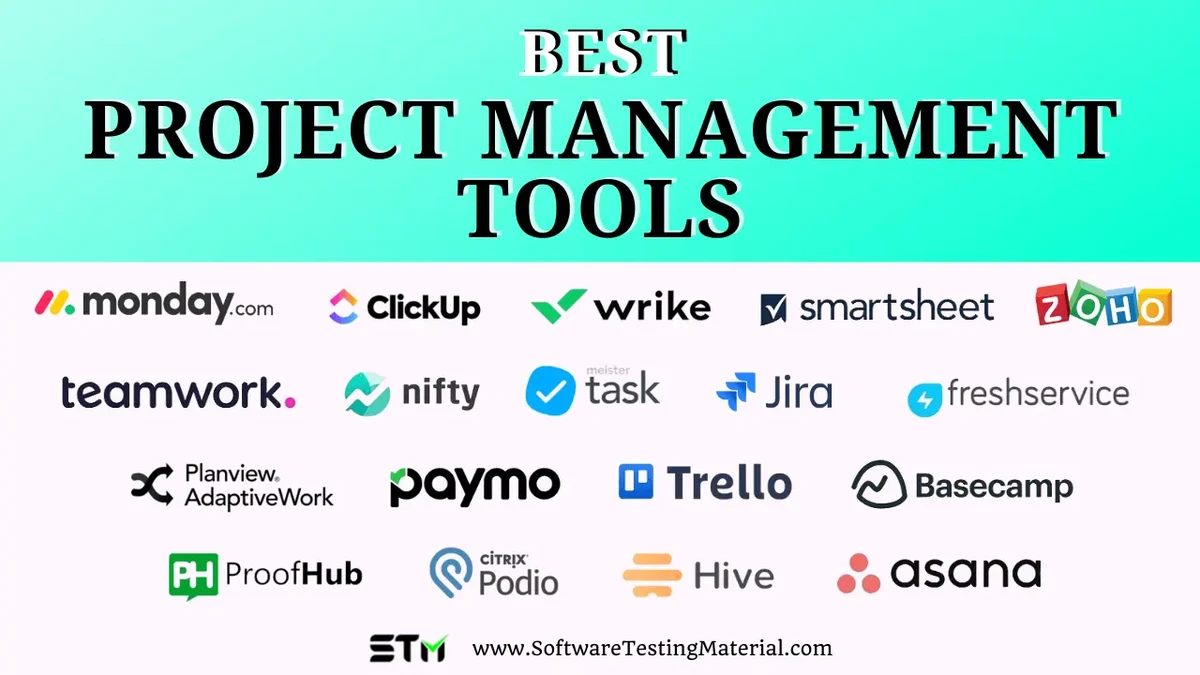
CRM Software – Project management tools are specialized software platforms designed to help teams plan, organize, and track projects with greater efficiency and clarity. These tools streamline task management, enable real-time progress tracking, and offer diverse visualization options such as Kanban boards, Gantt charts, and calendar views. By consolidating collaboration functionalities, time tracking, and workflow automation into a single interface, project management software reduces manual errors and enhances team productivity. Leading solutions like Wrike, Asana, Trello, Jira, ClickUp, and monday.com have become essential for modern organizations aiming to improve project delivery and resource allocation.
These platforms accommodate various project management methodologies, including Agile and traditional waterfall approaches, by integrating features such as sprint planning, task dependencies, and risk management. The rise of AI-powered insights within these tools further empowers teams to forecast resources, balance workloads, and automate repetitive tasks, thereby optimizing project outcomes. Integration with popular collaboration apps like Slack, Microsoft Teams, and Figma enhances communication, making project data accessible and actionable across distributed teams.
Types of Project Management Tools: Traditional vs Agile Approaches
Project management tools broadly fall into two categories: traditional and Agile. Traditional tools emphasize linear project phases, strict deadlines, and comprehensive Gantt charts that visualize task dependencies over time. Microsoft Project and Smartsheet exemplify this approach, offering robust scheduling, resource allocation, and scenario planning capabilities suited for large-scale, complex projects where scope and timelines are fixed.
Advertisement
Conversely, Agile project management tools prioritize flexibility, iterative progress, and team collaboration. Platforms like Jira, Trello, and ClickUp support Agile principles through features such as sprint planning, backlog management, and Kanban boards. These tools allow teams to adapt to evolving requirements, manage scope creep, and deliver incremental value through continuous feedback loops.
Many modern project management platforms, including monday.com and Wrike, provide hybrid solutions that incorporate both Agile and traditional elements, catering to diverse project workflows. Users often encounter free tiers with basic functionalities, while paid versions unlock advanced features like AI-driven automation, detailed analytics, and enhanced integrations. For example, Trello’s free plan offers unlimited boards and cards but limits automation rules, whereas its premium tiers enable complex workflow automations and priority support.
Key Features That Define Effective Project Management Software
Task and deadline management form the foundation of project management tools. Features include task assignment, priority setting, due dates, and dependencies to ensure timely completion. Multiple project views accommodate different management styles: Kanban boards visualize workflow stages, Gantt charts illustrate timelines and task relationships, calendar views track deadlines, and table formats offer spreadsheet-like data manipulation.
Collaboration tools embedded within these platforms facilitate seamless communication through in-app chat, comments, and file sharing. Integration with communication platforms like Slack and Microsoft Teams ensures that updates and discussions stay centralized, reducing email overload and miscommunication.
AI-powered functionalities represent a significant advancement. Wrike, for instance, integrates AI to provide resource forecasting and workload balancing, helping managers allocate tasks more effectively and prevent team burnout. Automated reporting generates real-time insights into project health, risks, and performance metrics, enabling data-driven decision-making.
Reporting and analytics dashboards summarize key indicators such as task completion rates, time spent per task, and budget adherence. These insights allow project managers to identify bottlenecks, monitor team productivity, and adjust plans proactively.
Leveraging Agile Project Management Tools for Iterative Success
Agile project management tools support core Agile principles such as flexibility, continuous delivery, and team empowerment. Sprint planning modules enable teams to define work cycles, prioritize backlog items, and assign tasks for iterative completion. Tools like Jira and ClickUp facilitate sprint tracking, velocity measurement, and burndown charts to monitor progress against goals.
Handling evolving project requirements and scope creep is streamlined through backlog refinement features and task reprioritization. Agile tools encourage transparency with real-time updates and visual boards, helping teams quickly adapt to changing client needs or unexpected challenges.
Several organizations report improved delivery speed and product quality after adopting Agile-compatible platforms. For example, Wrike’s Director of Account Development notes that teams using their Agile workflows benefit from enhanced cross-functional collaboration and reduced project delays.
Integration and Workflow Automation Elevate Project Efficiency
Integration capabilities significantly enhance project management software value. Connecting with communication apps such as Slack and Microsoft Teams ensures that messages, notifications, and task updates synchronize across platforms, minimizing context switching. Figma integration supports design collaboration directly within project workflows, streamlining feedback loops.
workflow automation features reduce manual effort by automating routine processes like status updates, task assignments, and deadline reminders. Customizable workflows and fields allow organizations to tailor the software to their unique processes, improving alignment and consistency.
Some platforms offer AI-driven automation to predict project risks or recommend task reallocations based on workload analysis. These smart automations free up project managers to focus on strategic activities rather than administrative tasks.
How to Choose the Right Project Management Tool for Your Team
Selecting an appropriate project management tool requires aligning software capabilities with organizational needs, team size, and workflow complexity. Smaller teams or startups may prioritize ease of use and affordability, favoring tools like Trello or Notion that offer intuitive interfaces and free tiers. Larger enterprises often need scalable solutions with advanced reporting and portfolio management, making Microsoft Project or Adobe Workfront more suitable.
User experience considerations include interface design preferences, mobile accessibility, and learning curve. For example, Asana’s clean UI appeals to teams focused on simplicity, while Jira’s feature-rich environment is preferred by technical teams managing complex software development projects.
Cost structures vary, with most platforms offering tiered pricing based on features and user counts. Organizations should evaluate upgrade paths to accommodate growth and avoid vendor lock-in. It is also essential to consider potential limitations of free plans, such as restricted storage, limited integrations, or capped automation rules.
Practical User Experiences: Trello vs Asana
Comparing Trello and Asana reveals distinct user experiences shaped by their design philosophies. Trello’s card-based Kanban boards offer visual simplicity and flexibility, making it ideal for task-centric teams and those new to project management software. However, it may lack depth in reporting and timeline views without paid add-ons.
Asana provides richer functionality with multiple project views, custom fields, and built-in timeline management. Users report that Asana’s interface supports complex project tracking and cross-team collaboration better, albeit with a steeper learning curve. Both platforms integrate with Slack and Microsoft Teams, enhancing communication.
Common pitfalls include accidental data deletion in Notion due to its flexible yet less structured nature, and feature gaps in free tiers that can hinder scaling. Success stories highlight increased transparency and accountability, with teams reducing meeting times and improving deadline adherence after adopting these tools.
Future Trends in Project Management Software
AI integration will continue to deepen, with predictive analytics helping managers anticipate project risks and optimize resource allocation dynamically. Hybrid and remote work models drive demand for enhanced collaboration features and cloud-based accessibility.
Scenario planning capabilities will expand, enabling teams to simulate project outcomes under varying assumptions, thus improving risk management. Workflow automation will become increasingly intelligent, adapting to team behavior and project context.
As organizations embrace digital transformation, project management platforms will evolve into comprehensive work management ecosystems, integrating with broader enterprise software and offering personalized insights powered by machine learning.
Project Management Tool |
Primary Methodology |
Key Features |
Free Plan Limitations |
Ideal For |
|---|---|---|---|---|
Wrike |
Hybrid (Agile + Traditional) |
AI-powered resource forecasting, Gantt charts, automation, integrations |
Limited automation, storage restrictions |
Mid to large enterprises with complex workflows |
Asana |
Agile and Traditional |
Multiple project views, timeline, custom fields, collaboration |
Limited dashboards, basic search |
Teams needing flexible task tracking and collaboration |
Trello |
Agile (Kanban) |
Kanban boards, integrations, basic automation |
Restricted automation rules, limited views |
Small teams, beginners |
Jira |
Agile (Software Development) |
Sprint planning, backlog management, robust reporting |
Limited users and features on free tier |
Software development teams |
ClickUp |
Hybrid |
Task management, docs, time tracking, automation |
Storage limits, some feature restrictions |
Teams needing an all-in-one platform |
monday.com |
Hybrid |
Custom workflows, dashboards, integrations, automation |
Limited views and users |
Scalable teams across industries |
FAQ
What are the main benefits of using project management tools?
Project management tools centralize task tracking, improve team collaboration, provide real-time visibility into project progress, and reduce manual errors. They also enable resource optimization and support various project methodologies, leading to more predictable and successful project outcomes.
How do Agile project management tools differ from traditional ones?
Agile tools focus on iterative progress, flexibility, and collaboration with features like sprint planning and Kanban boards, while traditional tools emphasize linear project phases, strict timelines, and detailed Gantt charts to manage task dependencies and resource allocation.
Can free project management software meet the needs of growing teams?
Free plans typically offer basic features suitable for small teams or simple projects but may lack automation, advanced reporting, and integrations needed for larger, complex workflows. As teams grow, upgrading to paid tiers is often necessary to access these capabilities.
How do AI-powered features enhance project management?
AI-driven functionalities assist in forecasting resource needs, balancing workloads, automating routine tasks, and providing predictive analytics for risk management, thereby enabling more efficient and proactive project oversight.
Which integrations are essential for effective project management?
Integrations with communication tools like Slack and Microsoft Teams, file sharing platforms, and design collaboration apps such as Figma are critical for maintaining seamless workflows and centralized project communication across distributed teams.
For further detailed insights on Agile project management and software evaluations, visit Wrike’s Agile Project Management Guide and MediaValet’s Project Management Software Review.
Advertisement