Advertisement
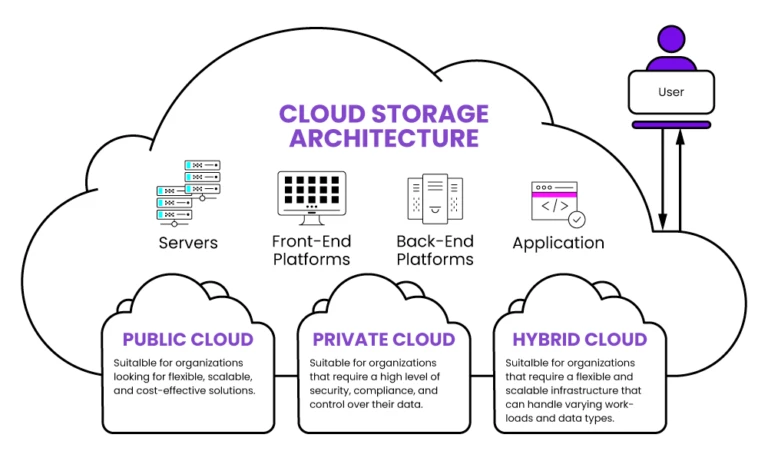
CRM Software – Cloud storage is a data storage model where digital information is stored on remote servers managed by third-party cloud service providers and accessed through the internet. This architecture relies on virtual machines hosted across multiple physical servers within geographically distributed data centers. Unlike traditional local storage, cloud storage offers elastic scalability, allowing resources to be dynamically allocated or released based on demand, thus supporting varied workloads ranging from personal file backups to enterprise-scale applications.
Data durability in cloud storage is achieved through sophisticated replication techniques, often spanning multiple data centers to ensure redundancy and fault tolerance. Access to cloud storage is facilitated via web portals, mobile applications, or APIs, enabling seamless data retrieval and management from virtually any internet-enabled device. The underlying infrastructure not only supports diverse storage models—file, block, and object storage—but also integrates advanced security protocols such as encryption both at rest and in transit, identity and access management (IAM), and zero trust architectures to safeguard sensitive data.
How Cloud Storage Works
Cloud storage operates through a multilayered architecture comprising physical data centers, virtualization layers, and storage management software. Physical servers housed in data centers run virtual machines that provide isolated environments for storage services. Data is distributed across these servers using techniques like erasure coding and replication to enhance durability and availability. For example, Amazon S3 replicates objects across multiple availability zones, ensuring 99.999999999% (eleven nines) of data durability annually.
Advertisement
Users interact with cloud storage via standardized protocols and interfaces. File storage mimics traditional hierarchical file systems accessible through SMB or NFS protocols, ideal for applications requiring file-level granularity. Block storage segments data into fixed-size blocks, offering low-latency access suitable for databases and transactional systems. Object storage manages data as discrete objects, each accompanied by rich metadata, facilitating scalability for massive unstructured datasets such as multimedia, backups, and big data analytics.
Cloud storage providers expose APIs (RESTful or proprietary) enabling programmatic data access and integration with cloud infrastructure and applications. This design supports automation, orchestration, and hybrid cloud scenarios where on-premises systems extend into the cloud seamlessly.
Types of Cloud Storage
Cloud storage manifests primarily as file storage, block storage, and object storage, each optimized for specific use cases and performance characteristics.
File storage offers a familiar directory and file hierarchy, supporting shared access environments like collaborative document editing and content management systems. It typically relies on network-attached storage (NAS) principles and is beneficial for scenarios demanding file locking and metadata operations. However, file storage may face scalability limits due to its hierarchical nature.
Block storage divides data into uniform blocks, which are individually addressable and highly performant. This storage type closely resembles traditional storage area networks (SANs) and is favored for applications with high I/O demands, such as database management systems, virtual machine disks, and transactional applications. Block storage provides low latency and high throughput but lacks native metadata support beyond basic attributes.
Object storage stores data as objects, each paired with customizable metadata and a unique identifier. This flat namespace enables horizontal scaling to petabyte levels, making it ideal for large-scale unstructured data like images, videos, backups, and IoT data streams. Additionally, object storage supports features like versioning, lifecycle policies, and data replication across regions, enhancing data management flexibility.
Storage Type |
Data Structure |
Use Cases |
Advantages |
Limitations |
|---|---|---|---|---|
File Storage |
Hierarchical files and folders |
Collaboration, content management |
Familiar interface, file locking, easy sharing |
Limited scalability, slower with large datasets |
Block Storage |
Fixed-size blocks |
Databases, VMs, transactional apps |
High performance, low latency |
No metadata support, complex management |
Object Storage |
Objects with metadata |
Backups, multimedia, big data |
Highly scalable, flexible metadata, cost-effective |
Higher latency, not suitable for transactional apps |
Deployment Models of Cloud Storage
cloud storage deployment varies across personal, enterprise, and hybrid models, each tailored to distinct operational and security requirements.
Personal cloud storage typically targets individual users or small teams, offering user-friendly interfaces and integrations with consumer devices. Services like Dropbox and Google Drive exemplify this model, emphasizing ease of use and collaboration.
Enterprise cloud storage involves large-scale, often mission-critical data management with stringent security and compliance mandates. Providers like Microsoft Azure, AWS, and IBM Cloud deliver customizable storage tiers and integration with enterprise IT infrastructure, supporting complex workflows and regulatory requirements.
Hybrid cloud storage blends on-premises assets with public cloud resources, offering organizations flexibility to optimize cost, control, and performance. This model is increasingly popular among enterprises transitioning workloads to the cloud while retaining sensitive data locally. Hybrid implementations utilize gateways and orchestrators to synchronize data, enforce policies, and provide unified management interfaces. For example, Tata Communications offers hybrid cloud solutions that seamlessly integrate private data centers with public cloud storage, enhancing resilience and agility.
Key Features and Benefits
Scalability and elasticity are fundamental to cloud storage, enabling automatic adjustment of storage capacity in response to fluctuating demands. This contrasts with fixed-capacity local storage systems, which require costly hardware upgrades to scale.
Cloud storage’s flexibility extends to accessibility, allowing users to retrieve and manage data from any location with internet connectivity. Enterprises benefit from this by facilitating remote workforces and global collaboration. Enhanced interoperability with cloud infrastructure, such as compute and database services, streamlines application deployment and management.
Cost-effectiveness emerges from pay-as-you-go pricing models, reducing upfront capital expenditures and aligning costs with actual usage. This dynamic pricing, combined with reduced operational overhead, makes cloud storage economically attractive for both startups and established organizations.
Practical examples abound: enterprises migrating off-premises storage to cloud platforms report improved disaster recovery capabilities, faster deployment cycles, and simplified IT management. Dropbox’s integration of object storage has enabled them to handle billions of files globally while maintaining low latency and high availability.
Security and Compliance in Cloud Storage
Security remains a paramount concern in cloud storage adoption. Providers implement multi-layered defenses including encryption of data at rest and in transit using AES-256 and TLS protocols, respectively. Identity and access management governs user permissions, leveraging role-based access control (RBAC) and multi-factor authentication (MFA).
Zero trust architectures are gaining traction, applying continuous verification principles to limit lateral movement within cloud environments. These frameworks assume breach and enforce strict access policies, reducing insider threats and external attack surfaces.
Physical security of data centers complements digital protections. Leading providers operate facilities with biometric access controls, surveillance, and redundant power and cooling systems, adhering to standards such as ISO/IEC 27001 and SOC 2.
regulatory compliance is critical for enterprises handling sensitive or regulated data. Cloud providers offer certifications and tools supporting GDPR, HIPAA, PCI-DSS, and other frameworks. For example, Microsoft Azure’s compliance manager helps clients assess and manage regulatory risks in cloud storage deployments.
Challenges and Considerations
Despite its advantages, cloud storage presents challenges requiring careful evaluation. Data privacy concerns arise due to the relinquishment of direct control over physical storage media. Organizations must assess provider policies, data sovereignty issues, and contractual safeguards.
Network latency and bandwidth constraints can impact performance, particularly for large data transfers or latency-sensitive applications. Strategies like edge caching and data compression mitigate these effects but add complexity.
Vendor lock-in is a notable risk, as proprietary APIs and storage formats can hinder migration between providers. Adopting open standards and multi-cloud strategies can alleviate dependency while increasing operational flexibility.
Cost management demands ongoing monitoring to prevent spiraling expenses from unanticipated data egress or snapshot growth. Implementing automated policies for data lifecycle and tiering helps optimize expenditures.
Future Trends and Innovations
Sustainability is becoming integral to cloud storage operations. Providers are investing in energy-efficient data centers powered by renewable sources to reduce carbon footprints. Google Cloud, for example, matches its energy use with renewable energy purchases, driving greener storage solutions.
Advancements in AI and machine learning are reshaping data management by enabling predictive storage provisioning, anomaly detection, and automated compliance auditing. These technologies enhance operational efficiency and security posture.
Hybrid and multi-cloud storage architectures are expected to grow, driven by requirements for redundancy, compliance, and vendor diversification. Interoperability standards and cloud-native storage orchestration tools will facilitate seamless data mobility and unified management across heterogeneous environments.
Organizations preparing for these trends should evaluate their current infrastructure, prioritize flexible architectures, and invest in cloud-native skills to harness emerging capabilities effectively.
FAQ
What is the difference between file, block, and object storage in the cloud?
File storage organizes data in hierarchical directories and is ideal for shared access scenarios. Block storage divides data into fixed-size blocks for high-performance needs like databases, while object storage manages data as discrete objects with metadata, optimized for unstructured data and large-scale scalability.
How do cloud storage providers ensure data durability?
Providers use data replication across multiple geographically dispersed data centers and erasure coding techniques to protect against hardware failures, achieving high durability levels such as eleven nines (99.999999999%) annually.
Can cloud storage be used securely for sensitive data?
Yes, through encryption at rest and in transit, robust identity and access management, zero trust security models, and compliance with regulatory standards, cloud storage can securely handle sensitive information.
What are the main advantages of hybrid cloud storage?
Hybrid cloud storage offers flexibility by combining on-premises control with cloud scalability and cost benefits. It enables data locality, regulatory compliance, and optimized performance by leveraging both private and public cloud resources.
How does cloud storage impact IT infrastructure costs?
Cloud storage reduces upfront capital expenses by eliminating the need for physical hardware investments and shifts costs to a pay-as-you-go model, aligning expenses with actual usage while lowering operational overhead.
For further detailed insights on cloud storage, refer to Google Cloud’s comprehensive guide on cloud storage and Amazon Web Services’ explanation of cloud storage. These authoritative resources provide up-to-date technical details and best practices for implementing cloud storage solutions.
Advertisement